Seasonal Home Maintenance Checklist: Troubleshooting Your Fall Heating Startup
Smelling dust or hearing strange noises during your fall heating startup? Use our seasonal home maintenance checklist to know exactly when to call a pro.


Smelling dust or hearing strange noises during your fall heating startup? Use our seasonal home maintenance checklist to know exactly when to call a pro.

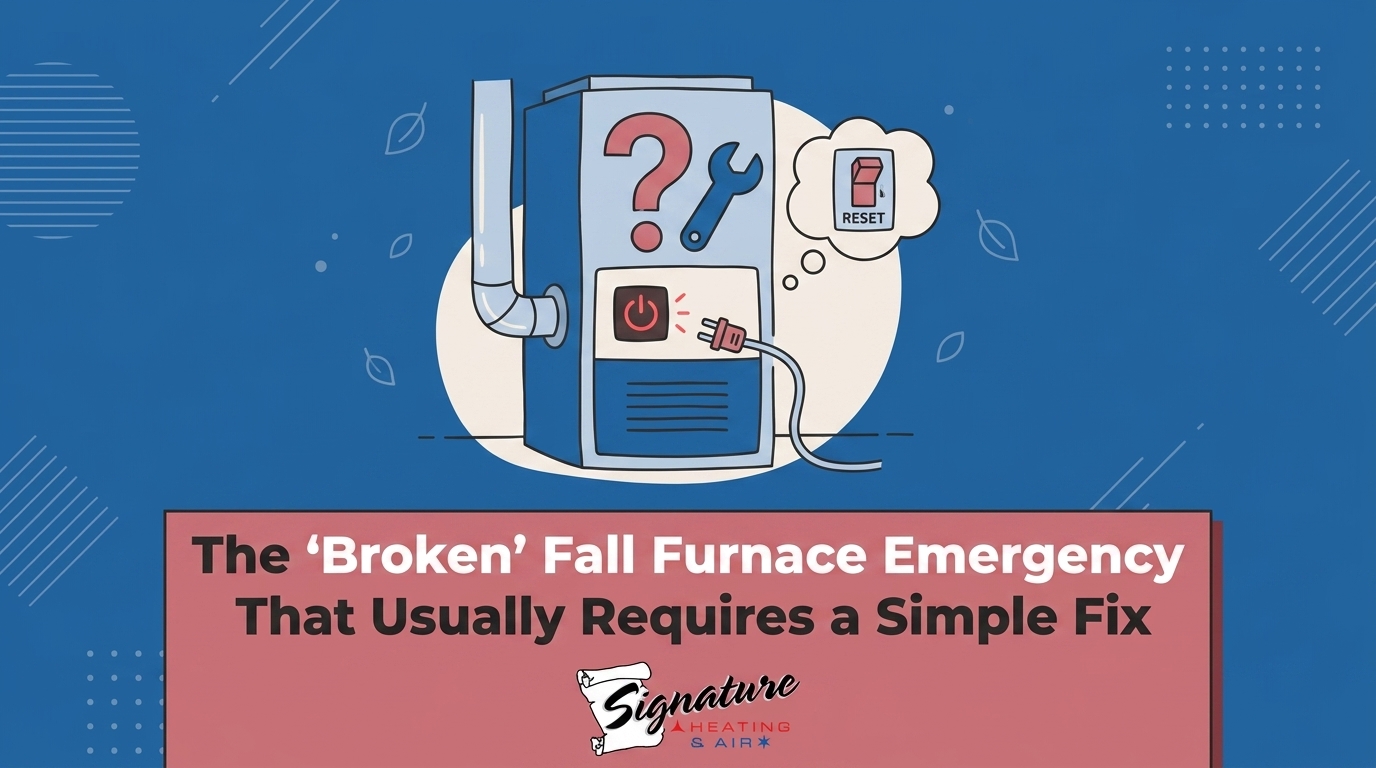
Your forced-air gas furnace has likely been sitting idle for months, which means your seasonal home maintenance checklist needs to prioritize a safe mid-fall heating startup. You turn up the thermostat on a chilly October evening, and instead of a quiet, comforting rush of warm air, you are greeted by an alarming burning smell and strange operational noises. In our years serving the community at Signature Heating & Air, we know this is a common and highly stressful scenario for many homeowners. When a heating system powers on for the first time after a long dormant period, it undergoes a sequence of operations that can produce unexpected sensory feedback. The immediate challenge is distinguishing between normal seasonal dust burn-off and a severe mechanical or safety hazard.
If you are transitioning from the cooling season and recently needed AC repair in Centennial, CO, your focus must now shift entirely to heating safety. A system that kept you cool all summer requires a completely different set of diagnostic checks before it can safely keep you warm. This critical transition period applies equally to traditional central heating systems and ductless mini split configurations. Understanding what to expect during this initial cycle is the first step in protecting your home and ensuring reliable comfort as the temperatures begin to drop.
The first time a forced-air gas furnace ignites in the fall, it almost always produces a distinct odor. This is a known phenomenon that causes unnecessary panic, but it is deeply rooted in the basic physics of how your HVAC system operates. The key to homeowner peace of mind is knowing exactly what is burning, how long the smell should last, and what specific odors indicate a genuine emergency.
Throughout the spring and summer months, your furnace's heat exchanger sits completely dormant. Even if your system shares ductwork with your air conditioner and the blower motor runs daily, the heating elements themselves remain cold. Over these months, fine particulate matter, pet dander, and household dust settle directly onto the metallic surface of the heat exchanger. When you initiate that mid-fall heating startup, the burners ignite, and the heat exchanger rapidly climbs to temperatures exceeding 140 degrees Fahrenheit. The accumulated dust instantly vaporizes. This process creates a distinct, slightly smoky odor that is pushed through your ductwork and into your living spaces.
The 60-minute rule: Normal dust burn-off smells should begin to dissipate within 30 to 60 minutes of continuous operation. You can safely open a few windows to ventilate the home during this initial cycle. However, there are strict, non-negotiable boundaries for shutting down the system. If the smell does not fade after an hour, or if the odor changes character, you must act immediately.
Abnormal smells that require immediate shutdown:
• Electrical burning: A sharp, acrid smell similar to melting plastic or burning wire insulation indicates an overheating blower motor, a failing capacitor, or a short circuit.
• Rotten eggs or sulfur: This is the universal warning sign of a raw natural gas leak. Shut off the system, leave the house, and call your gas provider.
• Persistent exhaust odors: Smelling exhaust fumes or aldehydes inside the home suggests that combustion gases are not venting properly through the flue.
• Musty, dusty burning — Likely Cause: Settled dust on the heat exchanger vaporizing. — Required Action: Wait 30-60 minutes; ventilate home.
• Melting plastic / wire — Likely Cause: Electrical short or overheating blower motor. — Required Action: Turn off system immediately at the thermostat and breaker.
• Rotten eggs — Likely Cause: Raw natural gas leak. — Required Action: Evacuate home, call gas utility provider.
• Metallic exhaust fumes — Likely Cause: Blocked flue or cracked heat exchanger. — Required Action: Turn off system, schedule professional diagnostic.

Beyond unexpected smells, the physical operation of your forced-air gas furnace during its initial cycles can reveal hidden dangers. One of the most common and misunderstood operational issues is short-cycling. Short-cycling occurs when the heating system turns on, runs for a brief period (often less than five minutes), and then abruptly shuts off before the home has reached the temperature set on the thermostat. This rapid on-and-off sequence places immense mechanical strain on the blower motor and the ignition system, but more importantly, it usually indicates that a critical safety switch has been triggered.
The most frequent culprit behind short-cycling is a severely clogged indoor air filter. When airflow is restricted, the heat generated by the burners cannot be pushed into the ductwork fast enough. This causes the internal temperature of the furnace cabinet to spike. To prevent a catastrophic fire, a component called the high-limit switch detects this excess heat and immediately cuts power to the gas valve, shutting the system down. Our team at Signature Heating & Air recently guided a local homeowner experiencing minor troubles with their HVAC system's heating and cooling cycles through basic troubleshooting over the phone, resolving a short-cycling issue simply by replacing a suffocated air filter without even needing a service visit.
However, if airflow is not the issue, short-cycling can point to a far more severe risk: a cracked heat exchanger. The heat exchanger is the metal shield that separates the toxic combustion gases from the breathable air circulating through your vents. Over years of expanding and contracting, this metal can develop hairline fractures. A cracked heat exchanger can leak carbon monoxide—an odorless, colorless, and highly dangerous gas—directly into your living spaces. Because carbon monoxide cannot be detected by human senses, inspecting the integrity of a heat exchanger requires specialized combustion analysis tools and digital cameras. This level of diagnostic work is strictly a job for licensed Centennial HVAC services. Attempting to patch or diagnose a heat exchanger without proper certification is a severe life-safety hazard.
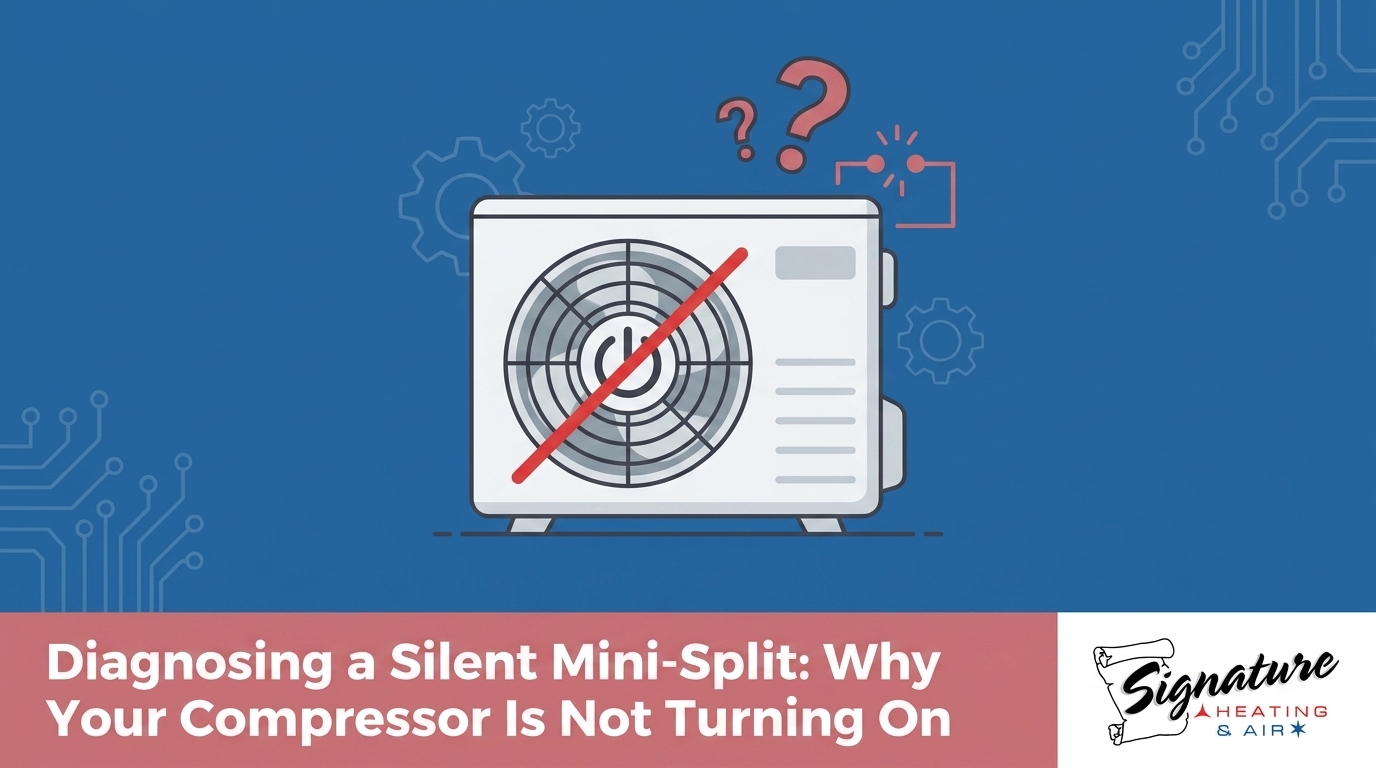
While forced-air gas furnaces dominate many basements, a growing number of homes rely on advanced heat pump technology for their mid-fall heating startup. Ductless systems provide highly efficient, targeted warmth, but they operate on entirely different mechanical principles than traditional gas furnaces. A common point of frustration during the seasonal transition occurs when the indoor wall cassette is blowing air, but the outdoor compressor remains completely silent and no actual heat is being produced.
Because ductless units handle both cooling and heating, the transition between seasons requires specific operational shifts. Honest diagnostics begin with empowering the homeowner to check basic reset procedures before assuming a major component has failed. This transparent approach prevents unnecessary upselling and ensures you only request a service visit when truly required.
1. Verify the operating mode: Ductless remotes often feature "Auto," "Cool," "Dry," and "Heat" modes. In the fall, leaving the system on "Auto" can cause the unit to become confused by fluctuating indoor temperatures. Manually set the remote specifically to "Heat" (often indicated by a sun icon).
2. Check the set point: Ensure the temperature is set at least three to five degrees higher than the current room temperature to force the system to call for heat.
3. Inspect the power supply: Check your home's main electrical panel for a tripped breaker. Additionally, inspect the outdoor disconnect box near the compressor to ensure the pull-out fuse block is seated correctly.
4. Replace remote batteries: A fading remote might display the correct settings on its screen but fail to actually transmit the infrared signal to the indoor wall unit.
If you have verified the power and thermostat settings, but the outdoor unit still refuses to engage, the system has likely locked itself out due to an internal fault. This could be a communication error between the indoor and outdoor circuit boards, a blown internal fuse, or a loss of refrigerant charge. Because ductless systems utilize complex inverter-driven compressors and high-voltage capacitors, opening the outdoor cabinet requires specialized electrical training. One Centennial customer recently reached out to our Signature Heating & Air team for an evening service call when their system experienced a stubborn compressor issue; our technician arrived promptly that same evening and fixed the problem correctly, highlighting the importance of having a qualified expert handle complex electrical diagnostics. If basic homeowner troubleshooting fails, it is time to rely on professional ductless mini split systems expertise.
A successful transition into the heating season requires proactive preparation. Waiting until the first freezing night to discover your system is malfunctioning is a recipe for emergency service calls and uncomfortable nights. By following a structured mid-fall heating startup checklist, you can optimize your system's efficiency, protect your indoor air quality, and extend the lifespan of your mechanical equipment.
• Replace all indoor air filters: This is the single most important step for both traditional furnaces and ductless systems. A clean filter ensures maximum airflow, prevents the heat exchanger from overheating, and stops the blower motor from straining. Check the MERV rating to ensure you are balancing filtration with proper air velocity.
• Clear outdoor debris: If you utilize a heat pump for warmth, the outdoor condenser needs at least two feet of clear space around its perimeter. Remove autumn leaves, overgrown branches, and debris that may have accumulated over the summer to ensure the coils can properly absorb ambient heat.
• Test life-safety devices: A mid-fall heating startup is the perfect reminder to test all carbon monoxide and smoke detectors in the home. Press the test button on each unit, replace alkaline batteries, and check the manufacturer date printed on the back—most CO detectors expire after five to seven years and must be completely replaced.
• Inspect supply and return registers: Walk through your home and ensure that rugs, furniture, or heavy curtains are not blocking your floor or wall vents. Closing vents in unused rooms does not save energy; it actually increases static pressure inside the ductwork and forces the blower motor to work harder.
• Schedule a professional inspection: Transitioning from routine AC maintenance to dedicated heating preparation requires a trained eye. A licensed technician will check gas pressure, inspect the flue for proper drafting, clean the flame sensor, and perform a combustion analysis that cannot be done safely by a homeowner.
As the experts at Signature Heating & Air can attest, heating a home in the local region presents unique mechanical challenges that go beyond standard maintenance. The physical environment directly impacts how a forced-air gas furnace operates, particularly during the critical fall startup phase. Centennial's specific climate and geographical elevation require a heating system to be calibrated with precision to ensure safe and efficient performance.
The reality of high altitude combustion: At higher elevations, the air is thinner, meaning there is less oxygen available per cubic foot of air. Gas furnaces require a very specific ratio of oxygen to natural gas in order to achieve clean, complete combustion. If a furnace is not properly adjusted for altitude, the fuel mixture becomes too "rich." This incomplete combustion produces excessive soot, which coats the heat exchanger and drastically lowers the system's efficiency. More alarmingly, poor combustion increases the production of carbon monoxide. Ensuring your burner orifices and gas pressure are correctly configured for the local elevation is a critical safety step that must be handled by a professional.
Rapid seasonal temperature shifts: October in the region is characterized by unpredictable weather patterns. Average lows can suddenly drop into the 30s, forcing a heating system that has been dormant for half the year to suddenly operate at maximum capacity. This sudden, intense mechanical strain increases the likelihood of startup failures, especially if routine maintenance was skipped during the spring and summer. A reliable heating startup is absolutely critical before the first hard freeze hits, as a sudden failure during a cold snap can lead to frozen pipes and severe property damage. Preparing your system for these rapid temperature drops ensures it can handle the intense workload without faltering.
For more comprehensive details on specific system types and advanced diagnostics, review a complete mini split troubleshooting guide before diving into these common mid-fall heating startup questions.
A normal dust burn-off smell should dissipate within 30 to 60 minutes of the first heating cycle. When the furnace turns on after months of inactivity, the dust that has settled on the heat exchanger vaporizes, creating a temporary dusty or slightly smoky odor. If the smell persists beyond an hour, or if it smells like melting plastic or electrical wiring, shut the system down immediately and contact a professional.
Short-cycling usually indicates that the system is overheating and a safety switch is shutting it down prematurely. The most common cause is a severely clogged air filter that restricts airflow, trapping heat inside the furnace cabinet. Other potential causes include an oversized furnace, a malfunctioning thermostat, or a blocked exhaust flue. Replacing the air filter is the first diagnostic step a homeowner should take.
You should call a professional immediately if you detect the smell of rotten eggs, as this indicates a raw natural gas leak. Additionally, odors resembling melting plastic, burning rubber, or metallic exhaust fumes require professional intervention. These smells point to electrical failures or compromised venting systems that pose severe fire or carbon monoxide risks to the household.
A cracked heat exchanger often produces a sharp, metallic, or formaldehyde-like exhaust odor inside the living space. Because the crack allows toxic combustion gases to mix with the breathable air in your ductwork, you may be smelling the byproducts of burning gas. However, it is crucial to remember that carbon monoxide itself is completely odorless, meaning a cracked heat exchanger can be deadly even if you do not smell anything unusual.
A mini split compressor may fail to engage if the thermostat is set to "Auto" instead of a dedicated "Heat" mode, causing the system to misread the ambient room temperature. It can also be caused by a tripped breaker at the main electrical panel or a blown disconnect fuse outside. If the power and settings are correct but the compressor remains silent, the system may have locked out due to a refrigerant issue or a communication error between the indoor and outdoor boards.
Successfully navigating your mid-fall heating startup is about much more than just achieving indoor comfort; it is about establishing a baseline of safety for your entire household. While a brief dusty odor during the first cycle of your forced-air gas furnace is perfectly normal, unusual noises, rapid short-cycling, and persistent chemical smells are serious red flags. Ignoring these symptoms in October often guarantees a catastrophic system failure in the dead of winter.
The ultimate goal of any seasonal home maintenance checklist is to provide you with a clear understanding of what operational behaviors are harmless and when a licensed technician is strictly required. By proactively replacing filters, testing your carbon monoxide detectors, and understanding the unique demands placed on your system by the local climate and altitude, you protect your investment. Completing these essential checks early ensures that when the deep winter freeze finally arrives, your home will remain a safe, warm, and reliable sanctuary.


The team at Signature Heating & Air did an excellent job with our new AC installation. They were professional and timely from the onsite quote to the final installation. Their attention to detail was top notch and I highly recommend anyone to give them a call.

I had a very positive experience with all the folks at Signature! Very professional, knowledgeable and honest. They installed a new A/C unit and kept my place clean and they worked with precision and efficiency. Highly recommend them!
I called Signature Heating & Air this morning for a relatively simple job of installing an Ecobee smart thermostat. Quentin came right on schedule and handled it efficiently. He was very helpful and patient to show me how the thermostat worked, etc. Thanks again! I highly recommend this company.
Timely, professional and reasonable pricing. They just replaced both my AC and furnace in about 4 hours. Cleaned up and all is running smoothly. I recommend and will use again when needed.
Steve was great and very professional. He came out and got my HVAC running the same day that I called. I will be using him and his company for my any furnace and AC problems and maintenance.


.webp)
Wisetack - 0% APR up to 24 months (on approved credit)